5 Best Interdental Brushes (2026): A Practical Buying Guide
Affiliate disclosure: As an Amazon Associate, we earn from qualifying purchases. This comes at no extra cost to you, and it helps us keep our reviews independent.
String floss works — but for many people, interdental brushes work better. These tiny bottle-brush-style tools scrub the sides of teeth and sweep out debris that floss slides past, and multiple studies have found them more effective than floss at reducing plaque between teeth and calming inflamed gums. They’re also simply easier to handle: no wrapping string around your fingers, no awkward reaching for back teeth.
The catch is sizing. Interdental brushes come in numbered sizes, and picking the wrong one is the difference between a great tool and a useless one. This guide compares the best options and walks you through choosing your size — plus the braces, implant, and replacement basics nobody tells you.
No sponsored placements.
Quick Picks
| Our pick | Model | Standout feature |
|---|---|---|
| Best overall | TePe Interdental Brushes | The benchmark — 9 ISO sizes, plastic-coated wire |
| Best for braces | GUM Proxabrush Go-Betweens | Angled neck reaches around brackets |
| Best budget | Oral-B Interdental Brush | Solid everyday brush, easy to find |
| Best value multipack | Wisdom Interdental Brushes | Cheap bulk packs, decent quality |
| Best travel | Dentek Easy Brush | Compact with cap, great on the go |
[Check price on Amazon — insert affiliate link]
Detailed Reviews
1. TePe Interdental Brushes — Best Overall
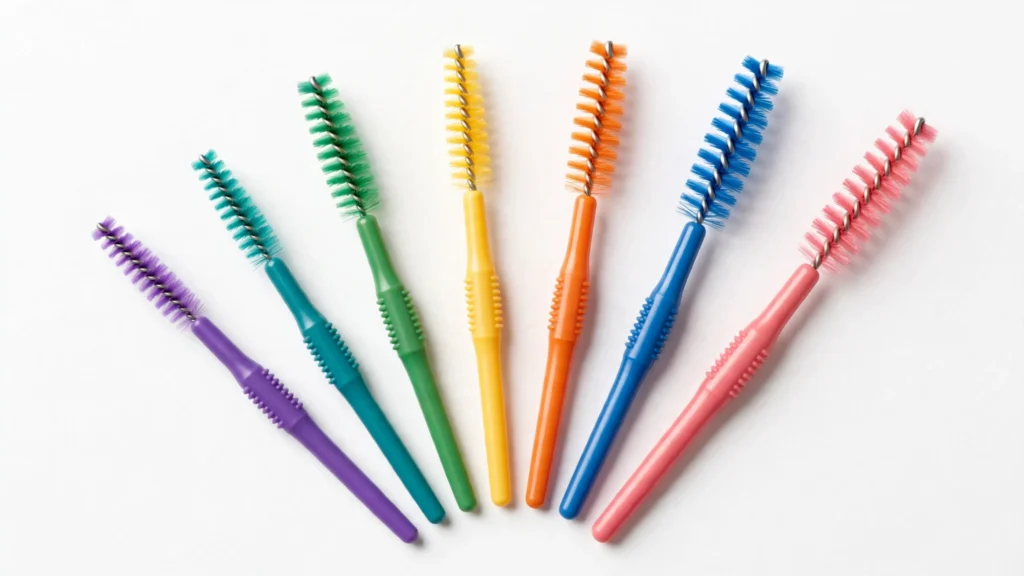
TePe is the brand dental professionals reach for, and the reason is the range: nine ISO sizes (0 through 8), each color-coded, with a plastic-coated wire that’s gentler on enamel and implant surfaces than bare metal. The handle is long enough for back teeth without finger gymnastics.
Key specs: 9 ISO sizes (0.4mm–1.5mm); plastic-coated wire; color-coded; long ergonomic handle.
Why it’s the top pick: Sizing is everything with interdental brushes, and nobody else offers this many steps. Most people need two or three different sizes for different parts of the mouth — front teeth, premolars, molars — and TePe’s system makes that straightforward. The coated wire is a real advantage if you have implants or crowns, where bare metal can scratch.
Pros: Widest size range on the market; plastic-coated wire safe around implants and crowns; color-coding makes reordering easy; comfortable handle.
Cons: Premium price per brush; buying three sizes adds up; individual packaging creates waste.
Best for: Anyone serious about interdental cleaning — and especially implant and crown wearers.
[Check price on Amazon — insert affiliate link]
2. GUM Proxabrush Go-Betweens — Best for Braces
GUM’s Go-Betweens have an angled (L-shaped) neck that slips under wires and around brackets — the geometry braces wearers actually need. The brush heads are replaceable on a reusable handle, which keeps the ongoing cost reasonable.
Key specs: Angled neck design; replaceable heads; multiple sizes; reusable handle.
Why it’s here: Braces create a forest of obstacles — brackets, wires, elastics — and a straight interdental brush can’t navigate them. The angled neck goes under the wire and between brackets where food packs in. If you wear braces, pair this with our guide to the best water flossers for braces for the full routine.
Pros: Angled neck genuinely works around braces hardware; replaceable heads cut long-term cost; widely available in drugstores.
Cons: Fewer sizes than TePe; heads wear out faster than premium brushes; handle is short for deep back teeth.
Best for: Braces wearers who need to clean under wires and around brackets daily.
[Check price on Amazon — insert affiliate link]
3. Oral-B Interdental Brush — Best Budget
Oral-B’s interdental brush is the straightforward drugstore option: a small brush on a cap-covered handle, sold in a few common sizes at a low price. No frills, but it cleans between teeth perfectly well.
Key specs: Several standard sizes; protective cap doubles as handle extender; affordable.
Why it’s here: Not everyone needs nine ISO sizes. If your gaps are average and you want to try interdental brushing without committing to a system, this is the low-risk entry point. The cap is a nice touch — it keeps the brush clean in a bag and extends the handle when attached.
Pros: Cheap and easy to find; cap keeps brush hygienic for travel; good enough for average gaps.
Cons: Limited size range — very tight or very wide gaps aren’t covered; wire isn’t coated on all variants; bristles splay sooner than premium options.
Best for: First-timers and anyone with average spacing on a budget.
[Check price on Amazon — insert affiliate link]
4. Wisdom Interdental Brushes — Best Value Multipack
Wisdom sells interdental brushes in generous multipacks at a fraction of the per-brush cost of premium brands. The quality is perfectly serviceable — tapered brushes in the common sizes, with caps.
Key specs: Bulk packs (20–50 brushes); tapered design; common sizes; very low per-brush cost.
Why it’s here: Interdental brushes are consumables — you should replace them about weekly (more on that below). At that replacement rate, per-brush cost matters, and Wisdom’s bulk pricing makes daily interdental brushing genuinely cheap. The brushes themselves clean fine; you’re not getting TePe’s coated wire or nine sizes, but most people don’t need them.
Pros: Extremely cheap per brush; bulk packs last months; tapered shape suits varied gaps.
Cons: Fewer size options; wire uncoated — take care around implants; bristles wear faster.
Best for: Daily users who replace brushes weekly and watch the budget.
[Check price on Amazon — insert affiliate link]
5. Dentek Easy Brush — Best Travel
The Dentek Easy Brush is built for bags and pockets: a compact brush with a snap-on cap, a flexible wire neck, and a mint-flavored bristle option. It won’t replace a full-size system at home, but it’s the brush you’ll actually carry.
Key specs: Compact size with ventilated cap; flexible wire; mint or unflavored; disposable.
Why it’s here: The best interdental tool is the one you have with you after lunch. Dentek’s cap keeps it clean in a pocket, the flexible neck reaches back teeth decently for its size, and it’s cheap enough to keep one everywhere — desk, bag, car.
Pros: Truly portable with hygienic cap; flexible neck; mint option freshens breath; inexpensive.
Cons: Small handle limits leverage on back teeth; not a full-size daily driver; disposable design.
Best for: On-the-go cleaning after meals, as a complement to your home routine.
[Check price on Amazon — insert affiliate link]
Buying Guide: Size, Braces, Implants, and Replacement
1. How to choose your ISO size. Interdental brush sizes follow the ISO standard: size 0 is 0.4mm, size 8 is 1.5mm. The right size slides in with light resistance — snug enough that the bristles contact both tooth surfaces, loose enough that you never have to force it. If it won’t go in without pushing hard, it’s too big; drop down a size. If it slides through without touching the sides, it’s too small; go up. Most mouths need 2–3 different sizes: smaller in front, larger between molars. When in doubt, buy a mixed starter pack and test.
2. Never force it. This is the golden rule. Forcing an oversized brush between teeth can damage gums and the tiny triangle of gum (papilla) between teeth — and that tissue doesn’t always grow back. Light resistance is right; pain or hard pushing means wrong size.
3. Braces: go angled. Straight brushes can’t get under orthodontic wires. Angled-neck brushes (like the GUM Proxabrush above) or brushes with a long, thin handle are designed for this. Clean around every bracket daily — brackets are plaque magnets, and the white spots that form around them during treatment are permanent. See our guide to the best electric toothbrushes for braces for the brushing side of the routine.
4. Implants and crowns: choose coated wire. Bare metal wire can scratch implant surfaces and some crown materials. Plastic-coated wires (TePe’s signature feature) are the safer choice around implants — and be gentle regardless.
5. Replace about weekly. When the bristles start to splay, bend, or lose their shape, the brush stops cleaning properly and starts irritating gums. For daily users that’s roughly one brush per week. This is why bulk packs (like Wisdom’s) make sense — the per-week cost of interdental brushing can be lower than a coffee.
6. Interdental brush vs. floss vs. water flosser. Interdental brushes are best for gaps wide enough to fit one — they scrub more surface than floss. Floss is best for tight contacts where no brush fits. Water flossers are best for flushing around braces and below the gumline. Most thorough routines use two of the three; all three is the gold standard for braces.
FAQ
Are interdental brushes better than floss?
For gaps they fit, yes — the evidence favors interdental brushes over floss for plaque removal between teeth and for reducing gum inflammation. But they can’t fit very tight contacts, where floss is still the tool. Think of them as complements.
What size interdental brush should I start with?
Start with a small-to-medium mixed pack (roughly ISO 1–3 for most adults) and test each gap. The right size meets light resistance. Many drugstores sell mixed packs precisely for this.
Can I use interdental brushes with braces?
Yes — use an angled-neck brush designed to go under wires, and clean around every bracket. Don’t use oversized brushes that catch on the wire and bend brackets.
How do I clean the brush itself?
Rinse it under running water after each use and let it air-dry (don’t cap it wet). Replace it when bristles splay — about weekly for daily use.
Do interdental brushes damage gums?
Correctly sized brushes don’t. Bleeding at first usually means the gums were already inflamed — it typically settles within a week or two of daily use. Forcing an oversized brush is what causes damage.
The Bottom Line
For gaps they fit, interdental brushes are the most effective interdental tool you can buy. TePe is the benchmark — the size range and coated wire justify the price, especially for implants. GUM Proxabrush Go-Betweens is the pick for braces thanks to the angled neck. On a budget, Wisdom’s bulk packs make weekly replacement painless, and Dentek Easy Brush belongs in every bag. Size it right, never force it, replace it weekly.
Cleaning around braces? Pair your interdental brush with the best water flosser for braces and the best electric toothbrush for braces for the complete routine.